
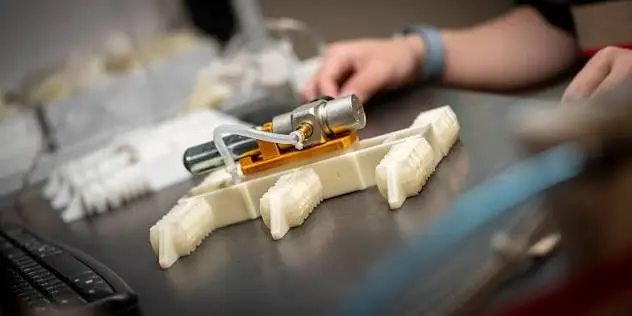
Low-volume production sits in an awkward space. A company may need more than a few prototypes, but not enough parts to justify expensive tooling, long setup times, or a full production line. That is one reason Huntsville additive manufacture has become relevant to aerospace, defense, industrial, and product-development work.
Additive manufacture can shorten the path from design to usable part, especially when quantities are limited and geometry is complicated. It does not replace every conventional process. Its value is strongest when tooling costs, design flexibility, lead time, or part complexity matter more than squeezing every possible cent out of a very large run.
Table of Contents
Avoiding Tooling That Never Pays for Itself
Traditional manufacturing often depends on molds, dies, fixtures, or dedicated machining setups. Those investments make sense when thousands of identical parts will be produced. For a run of twenty, fifty, or a few hundred pieces, the math can look very different.
Additive manufacture builds parts directly from digital files, so there is often less need for custom tooling before production begins. That can make the economics more reasonable for bridge production, replacement parts, pilot builds, and specialized components. A company can spend more of its budget on the part itself instead of equipment or tooling that may never be used again.
Making Design Changes Without Restarting the Whole Process
Low-volume work often changes as it moves forward. A mounting point shifts. A wall needs more thickness. A channel must be rerouted to clear another component. With conventional tooling, even a modest revision can create extra cost and delay.
Industrial 3D printing makes those adjustments easier because the geometry comes from the digital model. The file can be revised and another part can be produced without rebuilding a mold or cutting a new die. That flexibility is useful when engineers are still learning from physical parts, testing fit, or refining a product before committing to a larger production method.
Matching the Printing Process to the Part
Not every additive process belongs in the same category. Fused deposition modeling is common for polymer parts, fixtures, housings, and prototypes where speed and design flexibility matter. Fused deposition modeling 3D printing can also be useful for low-volume jigs or shop aids that would be slow to machine from solid material.
Metal parts require a different approach. Powder bed fusion 3D printing uses a powdered feedstock and a heat source to build dense metal components layer by layer. Metal 3D printing can support shapes that would be difficult to machine, cast, or assemble from multiple pieces. That includes internal passages, lattice-like structures, and consolidated designs with fewer separate components.
Where Complex Geometry Starts to Justify the Process
Additive becomes more attractive when the shape of the part is driving conventional manufacturing cost. A simple block with a few drilled holes may still be cheaper to machine. A part with internal channels, deep cavities, unusual curves, or multiple intersecting features may tell a different story.
This is one reason rapid manufacturing 3D printing works well for certain low-volume applications. Complexity does not automatically require more cutting tools or extra setups in the same way it can with subtractive methods. Engineers can sometimes combine several parts into one printed structure, reducing assembly steps and eliminating joints that would otherwise need fasteners, welds, or seals.
Low-Volume Production Still Needs Engineering Discipline
The lack of conventional tooling does not mean the process is casual. Printed parts still need thoughtful design, material selection, orientation, support strategy, post-processing, inspection, and, in many cases, machining of critical surfaces. Metal 3D printing Huntsville AL projects may also involve metallurgy questions, structural analysis, or CAD changes before a part is ready for production.
That matters because a model that prints successfully is not always a model that performs well in service. Heat buildup, support removal, surface finish, tolerance, and mechanical loading can all affect the final result. For low-volume production, the goal is not simply to make a part quickly. It is to create a repeatable method that can produce the needed quantity with acceptable quality from the first build through the last.
Using Additive Where It Creates a Real Production Advantage
Additive fits best when low quantities, difficult geometry, short lead times, or frequent design changes would make conventional production inefficient. It can also make sense for older equipment that needs replacement components after original tooling has disappeared. On the other hand, simple parts produced in large quantities may still belong with machining, molding, casting, or other established processes.
The practical choice comes down to the part, material, quantity, tolerance, and end use. Companies considering metal additive manufacturing should compare more than printing cost alone. Design work, post-processing, inspection, and secondary machining all affect the real production path.
If a project reaches the point where specialized metal additive manufacturing expertise is needed, Additive Manufacturing Engineering is one provider companies can consider. Its work includes metal 3D printing, design optimization, prototyping and production, structural CAD, metallurgy-related analysis, and engineering support. For low-volume programs with complex metal parts, that kind of technical involvement can help determine whether additive is actually the right process rather than simply the newest option.
















































































































































































































































































































































































































































































































































































































































































































































































































































































0