
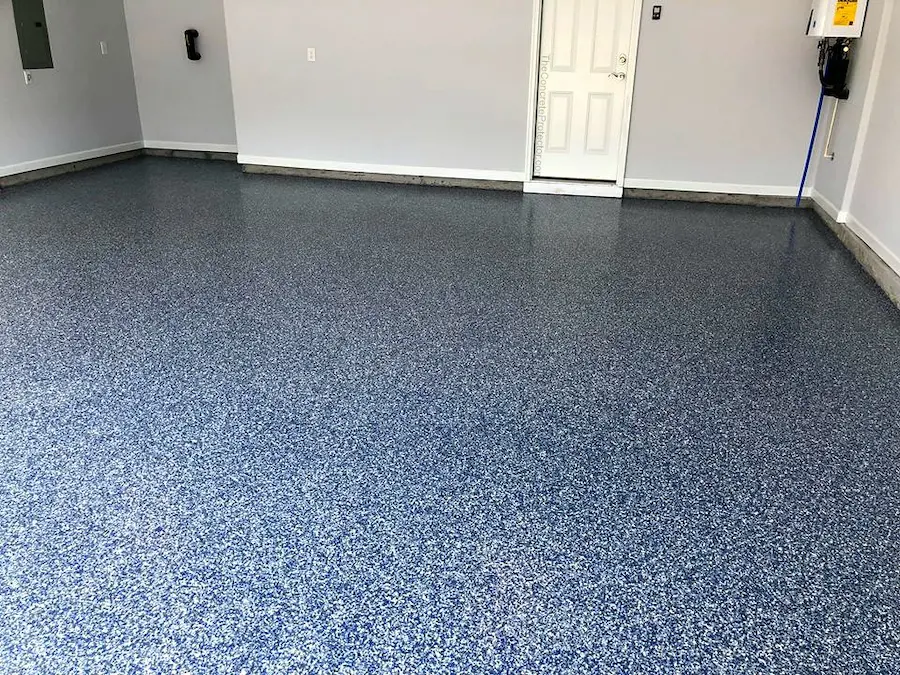
Speed sounds attractive when a garage or work area needs to return to service quickly, but installation time alone says surprisingly little about coating quality. A legitimate single-day system can perform well when the products, concrete conditions, and preparation methods support that schedule, while more involved projects may benefit from several application stages. Understanding what happens during those hours gives property owners a better way to compare epoxy flooring companies than simply asking which crew finishes first.
Table of Contents
A One-Day Installation Is Not Automatically a Basic Coating
Single-day flooring systems often use fast-curing materials such as polyurea or polyaspartic products that allow several application steps within a shorter window. Fast chemistry can reduce downtime considerably, making these systems useful for residential garages, service areas, and businesses that cannot leave a floor unavailable for several days.
Premium installation, however, should be judged by the complete system rather than the clock. Instead of assuming that slower always means better, customers can compare surface preparation, moisture testing, coating thickness, repair procedures, product compatibility, and expected service conditions.
Surface Preparation Reveals How Seriously a Company Treats the Job
Preparation determines whether a coating bonds to sound concrete or merely sits over dust, contamination, and weak surface material. Grinding with professional equipment can remove old finishes, expose stable concrete, and create the surface profile needed for reliable adhesion.
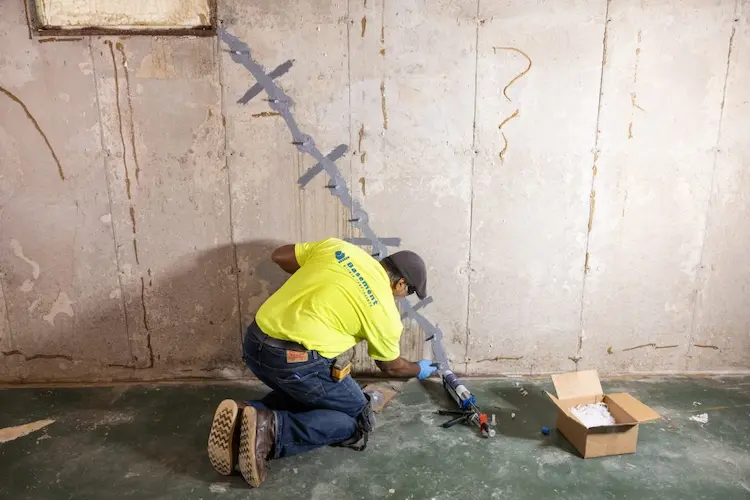
Meanwhile, cracks, spalls, oil-contaminated areas, and damaged joints may require individual treatment before any garage floor coating goes down. Careful installers allow the condition of the slab to guide preparation rather than forcing each garage through exactly the same routine because the schedule says the job must end by late afternoon.
Moisture Testing Can Separate a Quick Quote From a Detailed Floor Plan
Moisture inside concrete is easy to overlook because the top of a slab may appear completely dry. Testing can reveal vapor conditions that could interfere with adhesion, cause blistering, or require a moisture-control primer before the decorative system begins.
Contractors who evaluate moisture can adjust materials to suit the slab instead of discovering the problem after failure appears. Skipping evaluation may save time at installation, but anyone searching for an epoxy floor company near me should ask how the contractor handles moisture concerns and what happens if testing identifies an unsuitable condition.
Different Coating Chemistries Serve Different Purposes
Coating products do not all provide the same working time, thickness, UV resistance, chemical tolerance, or abrasion performance. Certain fast-curing materials perform especially well where rapid return to service and sunlight resistance are priorities, while high-build epoxy flooring can provide substantial body coats and strong adhesion in many interior applications.
Other systems combine epoxy primers or build coats with urethane, polyaspartic, or similar top layers to gain specific performance characteristics. Matching the chemistry to vehicle traffic, tools, chemicals, cleaning methods, and sunlight exposure usually matters more than whether the installer markets the project as one-day or multi-day.
The Number of Layers Does Not Tell the Whole Story
Layer count sounds impressive in advertising, but individual coat thickness and purpose matter more than simply adding up applications. One-day systems can still contain a base layer, decorative broadcast, and durable topcoat when the materials are formulated to cure quickly enough for that sequence.
Higher-build systems may require separate primer, body, aggregate, and protective stages, particularly on demanding commercial floors. This additional work can be useful where equipment, rolling loads, abrasion, or chemical exposure justify it, though extra layers that serve no clear purpose merely add cost and complexity.
Return-to-Service Time Depends on More Than Installation Speed
Cure time continues after installers leave, even if the surface already feels hard. Rapid-curing coatings may allow foot or vehicle traffic sooner, but manufacturers still specify minimum waiting periods based on product chemistry, temperature, humidity, and load type.
Traditional epoxy systems often develop their properties over a longer cure window, which can make scheduling more important for an epoxy garage floor. Neither timeline should be guessed from appearance alone, since parking a vehicle or rolling heavy equipment onto a young coating can damage a surface that seemed finished hours earlier.
Better Comparisons Focus on What the Floor Will Face After Installation
Warranties, product specifications, substrate repairs, surface profile, slip resistance, and maintenance guidance reveal more about an installer than a promise to complete the garage before dinner. Strong epoxy flooring companies should be able to explain why a particular system fits the environment and where its limitations are, rather than presenting one product as the answer for every slab.
Property owners can also describe hot-tire exposure, rolling toolboxes, parked trucks, chemical spills, sunlight, wash water, and expected foot traffic before comparing proposals. Pros LLC works with epoxy flooring, concrete preparation, high-performance coatings, and heavy-duty surface systems for garages, commercial properties, and industrial facilities, with flooring options selected around the actual demands of the space rather than a predetermined installation schedule.




























































































































































































































































































































































































































































































































































































































































































































































































































































































































































0