
During the late 1980s and early 1990s, global firearm imports shifted rapidly as manufacturers adapted to evolving sporting regulations. Among the most distinctive semi-automatic firearms exported to Western shooters was the norinco hunter 90, a rugged 7.62x39mm rifle that combined standard Kalashnikov internal reliability with European sporter aesthetics. Unlike standard military-style carbines with pistol grips and underfolding stocks, this model showcased a checkered one-piece birch stock, a curved trigger guard, and a receiver cover peep sight inspired by Finnish service arms.
Today, surplus collectors and custom rifle builders view these imported carbines as prized historical pieces. Whether preserved in their original factory sporting configuration or utilized as donors for Galil-style conversion projects, the platform offers exceptional mechanical durability and smooth cycling that rival modern civilian carbines.
Table of Contents
Design Origins and Mechanical Lineage
The foundation of the norinco hunter 90 traces back to China’s State Factory 386 and Factory 66, which built military Type 56 service weapons. To satisfy import criteria that favored traditional sporting configurations, Chinese engineers redesigned the external layout while maintaining the ultra-reliable long-stroke gas piston and rotating dual-lug bolt carrier group.
A notable departure from standard AK-pattern rifles is the top-mounted sighting system. Instead of the typical tangent sight placed forward on the gas tube, designers installed a windage-adjustable aperture peep sight directly on the reinforced receiver cover. This modification lengthened the sight radius, allowing shooters to acquire targets faster during woodland hunting or target sessions. As noted in historical surveys from the NRA American Rifleman’s firearm history archive, this hybrid layout closely echoed the geometry of the Finnish Valmet M76 hunting models of the same era.
Receiver Architecture and Trigger Linkage
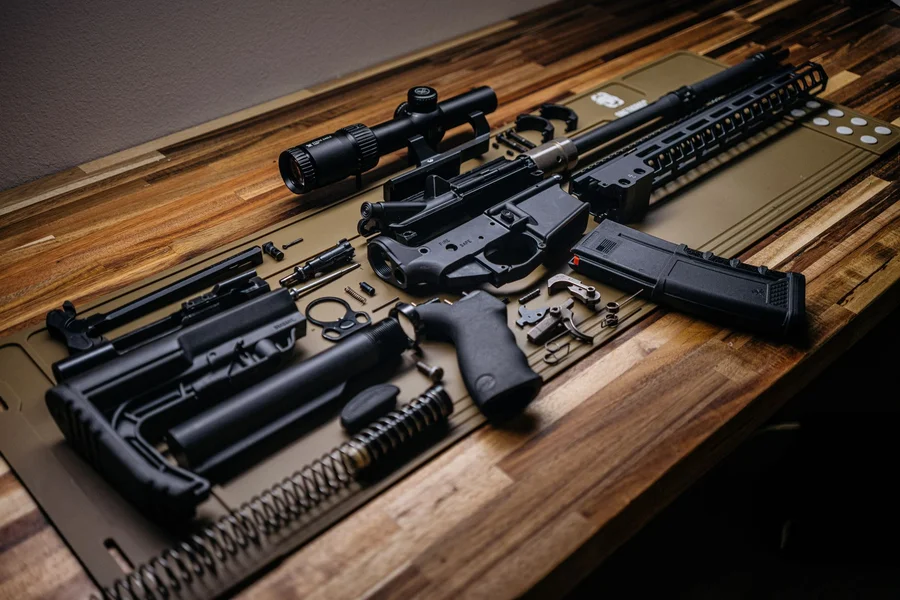
Inspecting the internal receiver geometry reveals how engineers altered the traditional trigger group to fit a conventional rifle stock. Because the grip angle sits well behind the magazine well rather than directly underneath the action, a dedicated transfer bar connects the curved sporting trigger to the double-hook sear. This mechanical linkage yields a long, smooth two-stage pull that differs noticeably from military combat triggers.
The rear of the receiver features an angled slant cut rather than a square backplate. While this slanted profile made the rifle lightweight and ergonomic for woodland carry, modern builders frequently take this cut into account when installing aftermarket adapters or mounting accessories. Shooters running long weekend courses in variable weather conditions often pair the rifle with durable tactical field apparel to ensure comfortable movement across rugged terrain.
Norinco Hunter vs. MAK-90 and Saiga Sporters
Shooters exploring vintage Cold War imports frequently evaluate the norinco hunter 90 alongside sibling rifles like the MAK-90 and Russian Saiga sporters. While all three share eastern bloc reliability, distinct factory choices set them apart in handling, balance, and customization potential.
| Feature | Norinco Hunter / Type 90 | Norinco MAK-90 Sporter | Izhmash Saiga 7.62×39 |
|---|---|---|---|
| Stock Design | One-piece checkered wood sporter stock | Thumbhole wood or composite stock | Polymer or wood Monte Carlo hunting stock |
| Rear Sight Location | Top-cover peep sight (long sight radius) | Rear sight block tangent ladder | Rear sight block tangent ladder |
| Receiver Type | 1.5mm stamped steel with slant cut | 1.5mm stamped or milled steel | 1.0mm Russian stamped steel |
| Magazine Latch | Shortened flush latch or standard paddle | Standard military rock-and-lock paddle | Proprietary sporter latch (needs bullet guide) |
| Primary Modern Appeal | Collector piece & Galil conversion donor | Traditional AK de-ban configuration | Russian collector rifle & AK-103 build base |
The Galil Conversion Phenomenon
Among firearm gunsmiths, the norinco hunter 90 gained legendary status because its stamped receiver dimensions match the profile required for Israeli Galil clones. The factory top-cover sight geometry, swept bolt handle clearance, and rugged trunnion construction allow experienced machinists to weld bullet guides, install Galil handguards, and fit folding stocks.
According to auction histories published in Rock Island Auction’s collector catalogs, pristine unconverted factory rifles have climbed steadily in value as builders depleted available surplus stock. Enthusiasts who add modern muzzle devices or experiment with barrel threading must check concentricity, particularly when pairing the firearm with affordable silencer options for sound-moderated outdoor target practice.

Shooting Impressions and Field Handling
Loading a five-round or ten-round steel box magazine into the receiver produces the reassuring mechanical click familiar to eastern rifle enthusiasts. At the shooting range, the rifle handles brisk recoil comfortably thanks to the broad wooden buttplate and forward weight balance provided by its chrome-lined barrel.
With standard 122-grain steel-cased ammunition, most rifles group between 2.0 and 3.0 inches at one hundred yards using factory iron sights. The rear aperture sight eliminates much of the target obscuration common to open notch sights, making plate transitions remarkably intuitive. Routine maintenance requires only field-stripping the bolt assembly and swabbing the chrome bore with standard solvent, confirming that legendary Chinese metallurgy withstands thousands of rounds without failure.
Frequently Asked Questions
What caliber does the Norinco Hunter 90 shoot?
The vast majority of Norinco Hunter rifles were chambered in the classic 7.62x39mm Soviet cartridge, utilizing standard box magazines. A smaller run of export models was produced in .223 Remington and .308 Winchester, though these variants are significantly rarer today.
Can a Norinco Hunter 90 use standard AK-47 magazines?
Yes, the rifle accepts standard double-stack steel and polymer AK-47 magazines. Some early import rifles featured shortened magazine release paddles designed for five-round hunting boxes, but standard surplus thirty-round magazines lock securely into place.
Why is the rear sight located on the receiver cover?
Chinese designers moved the rear sight to the back of the receiver cover to create an aperture peep sight with a long sight radius. This setup mirrors Finnish Valmet hunting rifles, giving hunters faster sight alignment on running game compared to traditional front-mounted tangent notches.
Why do gunsmiths use the Norinco Hunter for Galil conversions?
The receiver geometry, bolt carrier, and trunnions of the Hunter share mechanical similarities with the Finnish Valmet, which was the blueprint for the Israeli Galil. Skilled builders use the Hunter as a reliable, legally compliant receiver base for semi-automatic Galil builds.
How accurate is the Norinco Hunter 90 at 100 yards?
Using commercial steel-case 7.62x39mm cartridges, a clean factory Hunter shoots consistent 2.0 to 3.0 MOA groups. Because the barrel is chrome-lined and hammer-forged, precision remains steady even during rapid strings of fire.
Is the barrel of the Norinco Hunter threaded for muzzle brakes?
Most factory Hunter models imported into the United States featured unthreaded muzzle crowns to comply with sporting import rules. Owners wishing to attach muzzle brakes or suppressors have their barrels professionally threaded to 14x1mm left-hand or 5/8×24 thread pitches.

Written by Rosella
Rosella is a self-taught digital creator with a passion for breaking down tech, lifestyle, and everyday topics into simple, easy-to-understand content. Based in Youngstown, Ohio, she brings a curious, multi-disciplinary approach to writing, covering everything from the latest tech trends to practical life hacks and personal growth insights.
Her goal is straightforward: take complicated ideas and explain them in a way that actually makes sense, so every reader, whether a total beginner or someone more experienced, walks away having learned something useful. When she’s not writing, you’ll usually find her exploring new tools, sharpening her skills, or spending time with family.
Through this blog, Rosella aims to build a community centered on real, actionable insights rather than fluff, jargon, or filler content.

0