
Table of Contents
Key Takeaways
- Trust administration in Michigan typically spans several months to over a year, depending on various factors.
- Key steps include notifying beneficiaries, inventorying assets, paying debts and taxes, and distributing assets.
- Complex assets, beneficiary disputes, and tax issues can extend the administration timeline.
Table of Contents
- Initial Steps: Notification and Acceptance
- Inventorying Trust Assets
- Paying Debts and Taxes
- Distributing Assets to Beneficiaries
- Closing the Trust
- Factors Affecting the Timeline
- Tips for Efficient Trust Administration
- Conclusion
For anyone named as a trustee or set to receive assets from a trust, it is essential to understand the timeframes and steps involved in Michigan trust administration. The process often spans several months and can sometimes last over a year, depending on the trust’s complexity and any legal or tax issues that arise. By understanding these steps early, both trustees and beneficiaries can better manage expectations and responsibilities during this often emotionally charged period. Working with a qualified Grand Blanc trust administration lawyer can help ensure the process moves smoothly, staying compliant with the law while avoiding common pitfalls and unnecessary delays.
Michigan law governs trustees’ asset accounting, distributions, and legal obligations, with specific timeframes. They must act in beneficiaries’ best interests, meet deadlines for notifying beneficiaries, creditor claims, tax filings, and distributions. Good communication and legal advice are vital, especially in disputes or complex valuations. Staying up to date on trust practices helps prevent delays and disputes.
Initial Steps: Notification and Acceptance
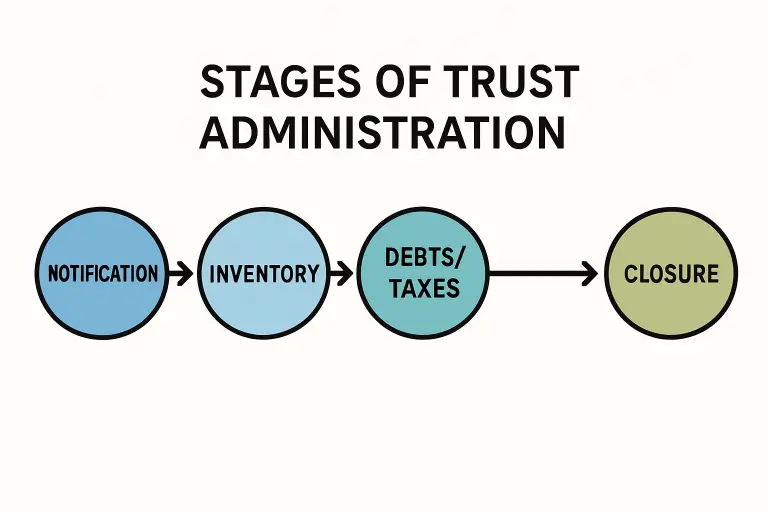
When a trust’s creator passes away, the successor trustee assumes control of the trust. Michigan law requires the new trustee to formally accept their appointment and inform all qualified beneficiaries of the trust’s existence and their rights. Within 63 days of assuming their role, trustees must provide this notification to ensure transparency and build trust among all parties involved. This early communication is essential in preventing later misunderstandings or disputes regarding the trust and its assets.
Inventorying Trust Assets
The trustee’s next priority is the comprehensive gathering, review, and valuation of all trust assets. These assets may include bank and investment accounts, real estate holdings, business ventures, and personal valuables such as art, jewelry, or antiques. To ensure precise valuations, especially for illiquid or atypical investments, trustees often collaborate with appraisers, financial experts, or attorneys. The duration of this phase can vary significantly, ranging from a few weeks to several months, depending on the trust’s size and complexity.
Paying Debts and Taxes
Trustees must first address the trust’s outstanding liabilities before any distributions occur. This entails notifying creditors, who have up to four months to present claims against the trust, in compliance with Michigan law. Trustees are required to pay valid debts using trust assets and to file and resolve any applicable federal or state income, estate, or inheritance taxes, depending on the asset type and value. The entire process generally spans at least 4 months, though it can be prolonged in cases of complex estates or disputed debts. Additionally, trustees are responsible for maintaining thorough documentation of all payments and tax filings to ensure proper accounting and liability protection.
Distributing Assets to Beneficiaries
With debts and taxes resolved, the trustee can administer the trust in accordance with its terms and make distributions to the intended beneficiaries. This involves transferring property titles, updating account names, and possibly selling assets if the trust mandates cash disbursements. A detailed accounting must be provided to beneficiaries to ensure all distributions are made transparently and in accordance with the trust’s terms.
This crucial step can range from several weeks to a few months as the trustee navigates paperwork, real estate closings, and beneficiary communications.
Closing the Trust
The final stage is formally closing the trust. Trustees must finalize the accounting records, file any necessary documents with the local court, and ensure all administrative tasks are complete. Michigan does not mandate court involvement in every trust closing, but certain scenarios, such as beneficiary disputes or oversight needs, may require judicial review or approval. The closing process usually requires several additional weeks, depending on the complexity and completeness of prior steps.
Factors Affecting the Timeline
Trust administration can be prolonged by various factors. The complexity of the assets involved, especially when trusts hold a mix of asset types, such as commercial properties or business interests, requires more administrative time. Additionally, disputes among beneficiaries can disrupt proceedings, potentially escalating to litigation or mandatory mediation. Tax issues further complicate the process, particularly in cases with intricate tax situations or when amended returns and audits are needed. Lastly, legal requirements in Michigan, including statutory creditor notice periods and compliance with notification mandates, introduce further delays due to necessary waiting periods.
Tips for Efficient Trust Administration
Stay organized by maintaining accurate records of trust transactions and communications to ensure accountability and effective administration. Clear communication is key; beneficiaries should get regular updates, especially during creditor claim periods or property sales. It’s wise to seek help from skilled attorneys, accountants, and fiduciary professionals to handle complex legal, tax, or asset issues. By managing deadlines, keeping detailed records, and communicating clearly, trustees can minimize challenges and ensure proper trust administration within a reasonable timeframe. Understanding these steps promotes transparency and trust among Michigan trustees and beneficiaries.
Conclusion
Administering a trust involves a structured process requiring patience, attention to detail, and legal compliance. It includes accepting the role, notifying beneficiaries, inventorying assets, resolving debts and taxes, distributing property, and closing the trust. Timelines vary based on asset complexity, legal obligations, and disputes, but organization and clear communication help reduce delays. Understanding the process and seeking professional guidance enable trustees to fulfill their duties responsibly, ensuring the trust’s intentions are carried out with confidence and transparency.

















































































































































































































































































































































































































































































































































































































































































































































































































































































































































































0